
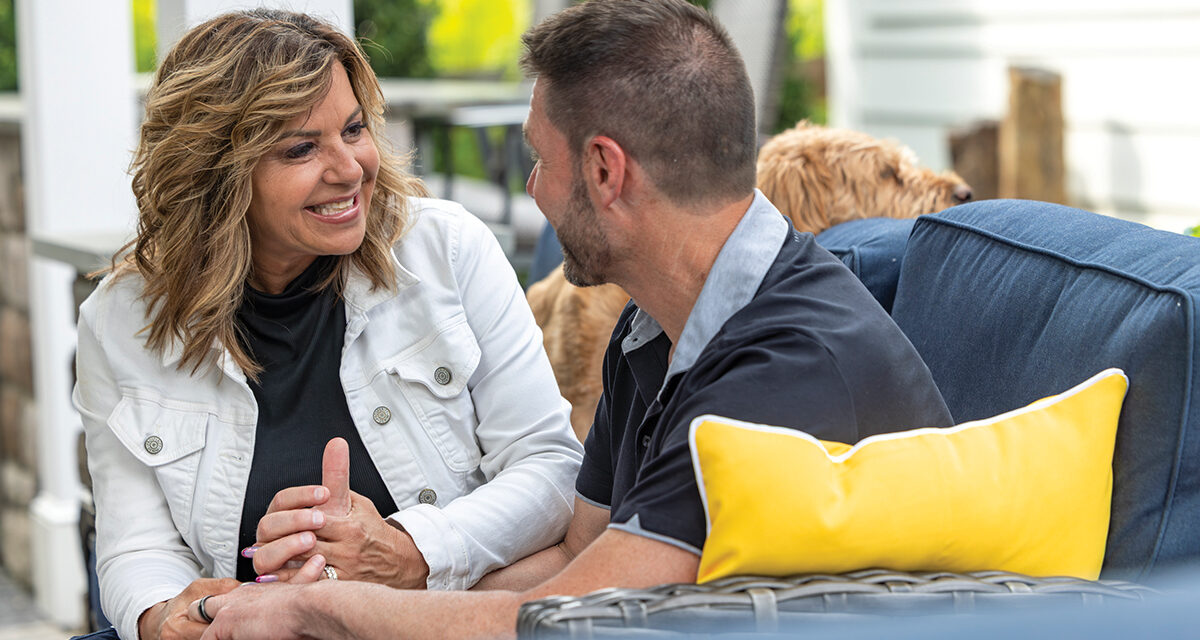
Younger-onset Alzheimer’s stole the future I imagined. Here’s what I want others to know about getting a diagnosis, the realities of caregiving, and how I channeled my grief into action to help other families facing this devastating disease.
Istarted seeing the early signs of my husband’s disease at the beginning of the COVID-19 pandemic. Looking back, they seem like little alarm bells pointing us toward a fate we never could’ve imagined.
We were living in a temporary apartment while building our dream home in Doylestown, PA. Like so many people around the world, we started working remotely. Anthony and I were living in close quarters and spending extra time together, and that’s when I began to see some very strange behavior in my husband. He was working as a regional chemical manager, and he couldn’t seem to adapt to a new software platform. His daughter was living with us at the time, and she showed him how to use the computer program at least seven times, and it just wouldn’t click. Other times we’d hear him on the phone with clients having trouble coming up with words and finishing his sentences.
At first I thought it could be undiagnosed attention deficit disorder. But then the short-term memory issues started happening. One day I reminded him that our wedding anniversary was June 20. A few minutes later I asked, “So what do you want to do for our anniversary?” His reply: “When is our anniversary?” That’s when I started getting really worried. I also noticed he was having trouble following directions from the GPS in the car on road trips, which was very unlike him. I knew something was wrong, but I couldn’t put my finger on it.
The Long Road to a Diagnosis
I logged on to Anthony’s health portal in September 2023 and found out he had younger-onset Alzheimer’s disease. (Yes, I first saw the diagnosis on the health portal.) It was a shock to say the least, given that Anthony was only 55 years old, incredibly fit, and seemingly very healthy. This was not a diagnosis we expected or understood.
We had chased answers for two years, I think partly because Anthony seemed so healthy. After the first appointment we made with his internist, blood work showed a vitamin B12 deficiency, and we thought that might explain his symptoms. Then we found out he might have sleep apnea and figured that was it. But Anthony’s symptoms persisted and even got worse.
In February 2022, I insisted Anthony see a neurologist. He played football for years, and I thought his history of concussions could help explain the forgetfulness and comprehension issues I was continuing to see. Unfortunately, it wasn’t until April 2022 that Anthony finally saw a neurologist, who completed an MRI test and said he was fine. He then completed a neuro-psych evaluation, and the results were sent directly to the neurologist for review. He had to wait until October 2022 to get a follow-up appointment, after which the clinician told him to go to a memory center immediately.
But I wasn’t with him at that appointment, and when he got home, he didn’t—or maybe couldn’t—remember what the doctor had said, so he told me, “The doctor said I’m fine.” The first piece of advice I give anyone worried about a loved one with any indication of memory loss is to accompany them to all doctor appointments.
Soon after Anthony’s evaluation, we were referred to specialists. Unfortunately, getting an appointment with those clinicians took us another eight months. And at that time, I knew we were in trouble. Around April 2023, Anthony’s job was in jeopardy. He couldn’t make calls, couldn’t put together a presentation, and would just stare at his computer. I’m a human resources director and knew Anthony needed to go on short-term disability so we could figure out what was happening to him. I’m grateful I had the training to recommend that; so many younger-onset Alzheimer’s patients lose their jobs due to this diagnosis because employers do not understand the signs of a medical condition and blame it on performance issues.
Finally, in May 2023 we started the testing for Alzheimer’s, and on September 7, 2023, I found out the love of my life had younger-onset Alzheimer’s.
By that point I had my suspicions that it was Alzheimer’s, but seeing that diagnosis was devastating. I was sitting alone in my office when I got the news and broke down. I kept asking myself, How will I tell Anthony? How will I break this news to our family?
What I know from my journey caring for Anthony is that it is crucial to have support. Even someone to just listen is helpful.
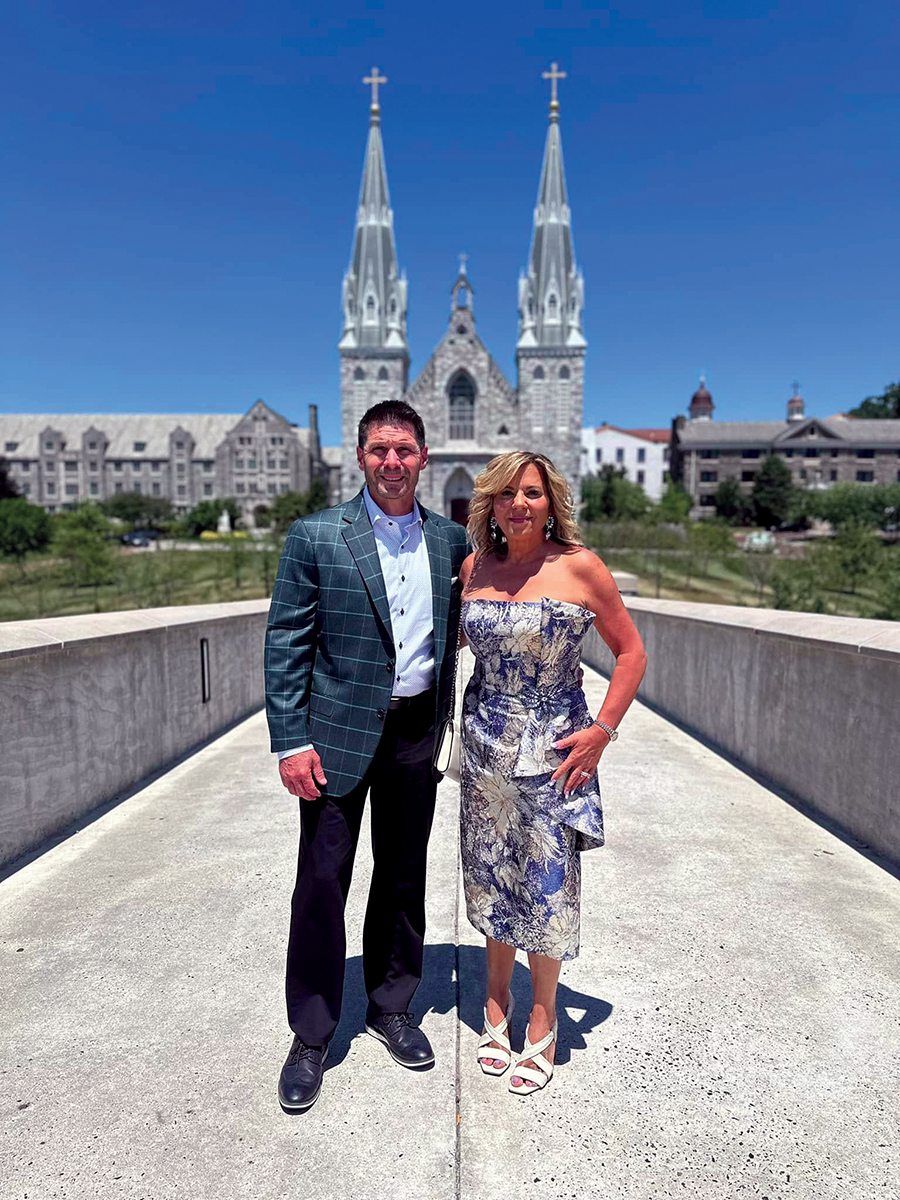
I don’t know what life without Anthony looks like. But I do know I’ll spend my retirement fighting to end this disease.
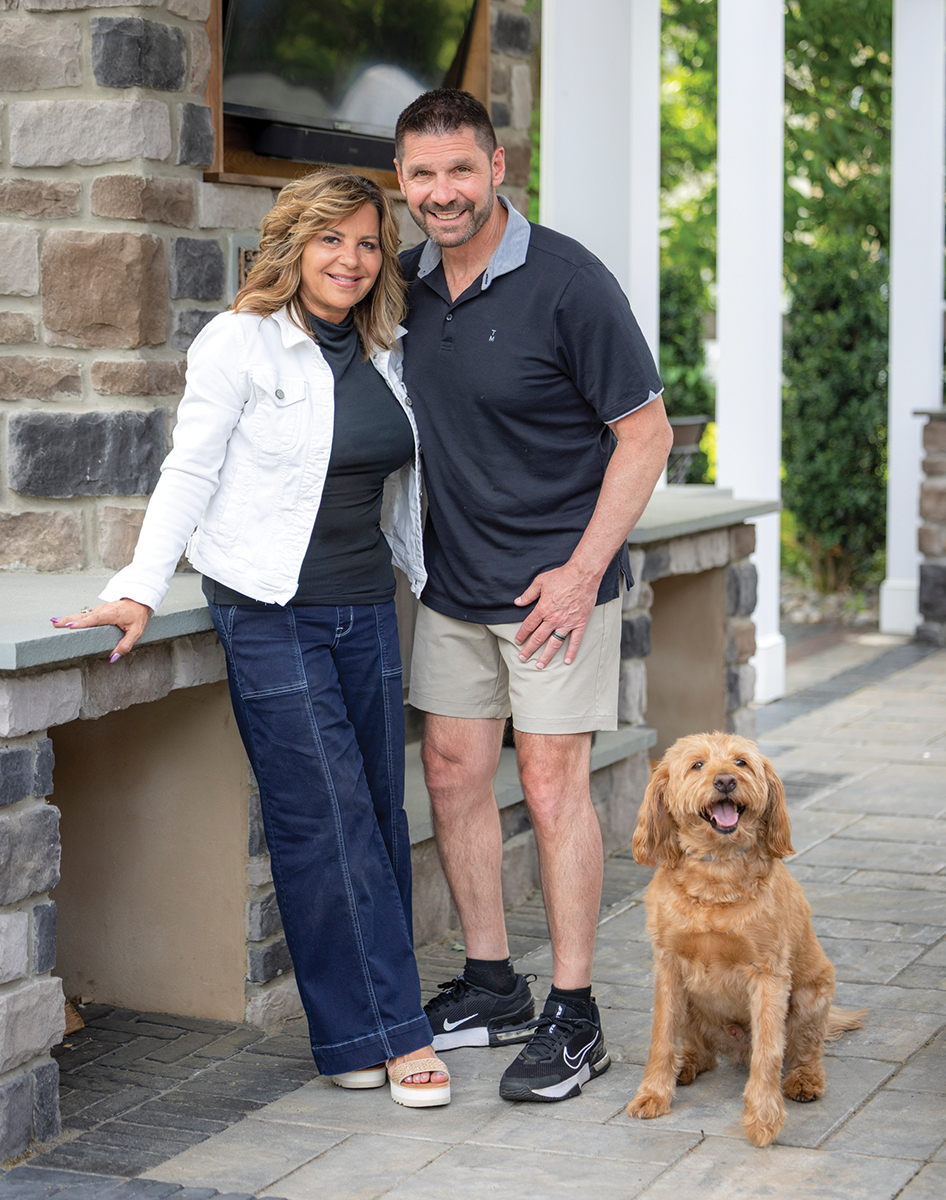
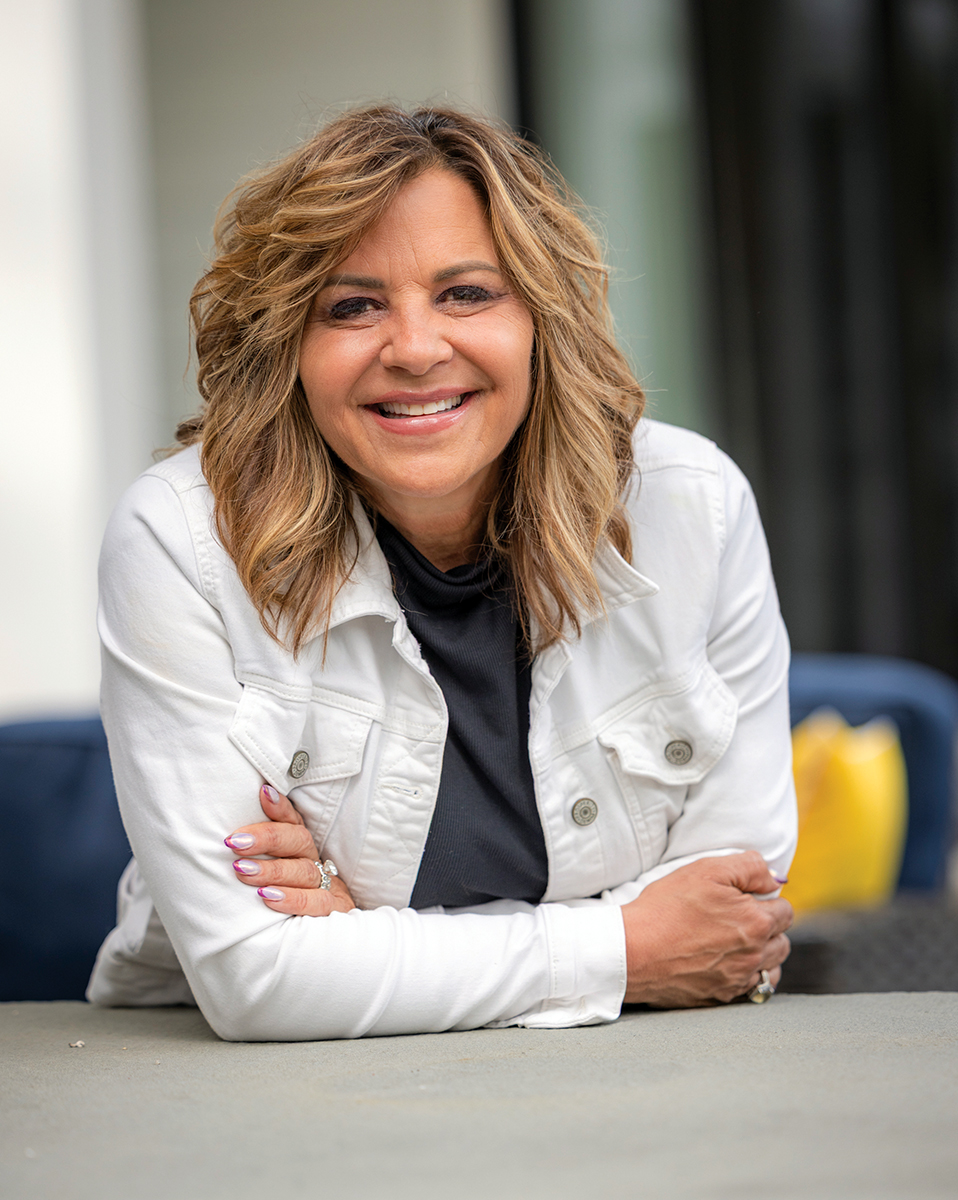
Charting an Unthinkable Path Forward
I had a lot of guilt in the weeks after his diagnosis for not going with him to that doctor’s appointment in October 2022. I felt like it was my fault that we lost so much time. I soon realized there was no cure, and I could not fix this on my own.
In those early days I cried a lot. Anthony and I cried together. Anthony always used to say that he wanted to
live to 100. I’d laugh and say, “Not me!” When he found out his diagnosis was terminal, it was devastating. But back then I was so hopeful. I said to him, “Anthony, I’m going to work hard to find a cure. I promise you, I’m going to do everything I can.” I thought, Anthony lives a healthy lifestyle. He’s fit. We have 10 years to find a cure. This was my mindset. I didn’t realize how fast his progression would happen.
I did do everything I could to help find a cure. I’m still doing what I can to end Alzheimer’s.
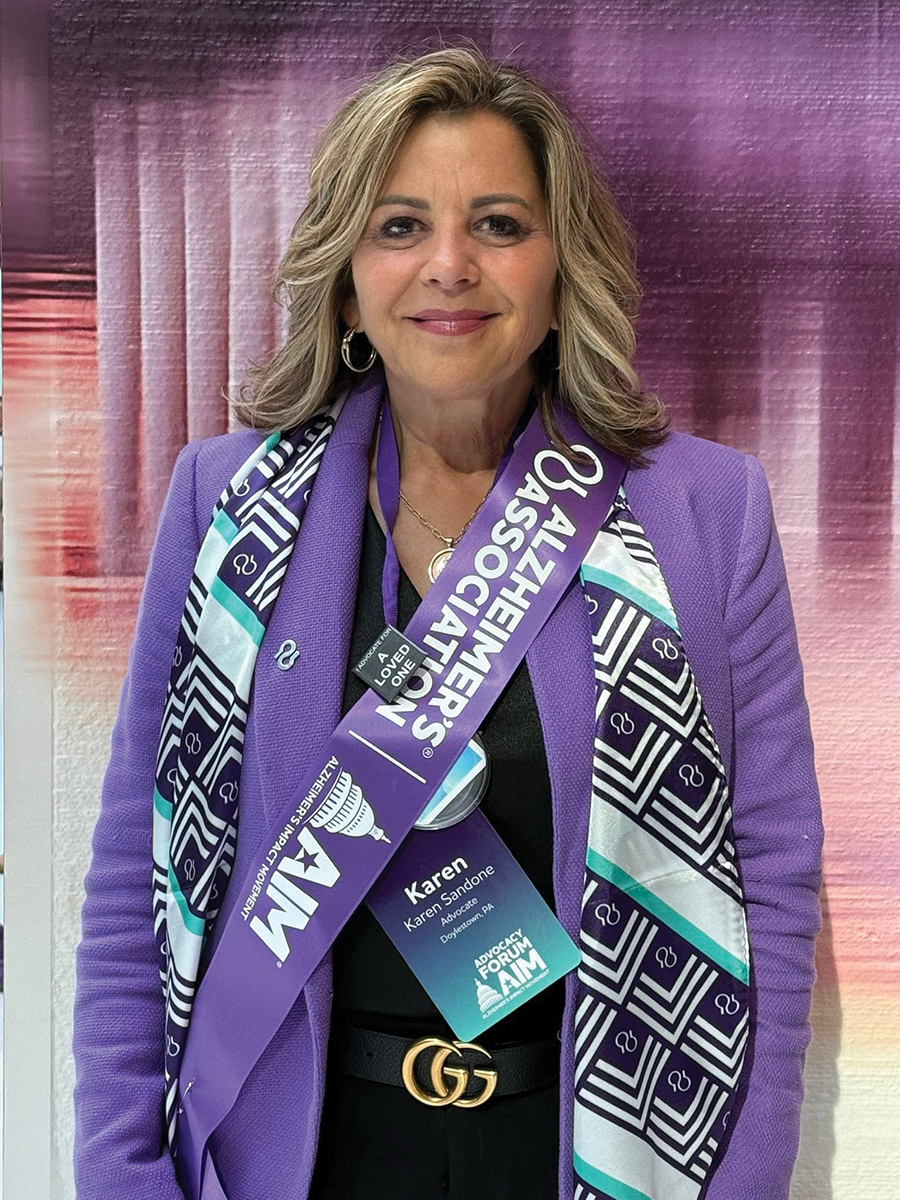
The first person I called was the executive director at the Alzheimer’s Association, and I asked, “What can I do? How far away are we from a cure?” I went to international Alzheimer’s conferences and organized fundraisers. Our family, friends, and community raised over $100,000 as part of our Sandone Strong events. I went to Washington, DC, to advocate for the bipartisan Alzheimer’s Screening and Prevention Act, which would create a path for Medicare coverage of blood-based dementia screening tests—a crucial step toward earlier detection and better care.
One of the things I’m most proud of is the support group I cofounded called Surviving the Now, which is for those caring for a loved one with younger-onset Alzheimer’s. We now have national awareness, which has given caregivers of a loved one with younger-onset Alzheimer’s a voice and support.
What I know from my journey caring for Anthony is that it is crucial to have support and to ask for help. Even someone to just listen is helpful. Every morning, I take our dog on a 10-minute walk—my only alone time—and I call my mom. She listens and lets me talk to her about how the night went, how I didn’t sleep, how hard it is to have a full-time job and be a full-time caregiver. She listens when I talk about how difficult it is to watch the love of my life have new symptoms and to decline. She’ll often say to me, “Karen, it’s hard for me to understand, I’m not in your shoes.” And I always tell her, “I know, and that’s okay. I just need you to listen.” What’s been amazing about Surviving the Now is that it’s filled with others who both listen and understand because they are in your shoes, caring for a loved one with younger-onset Alzheimer’s. This group fully understands the grief and despair that we face every day.
Surviving the Now has grown so substantially that we have created regional support groups, which includes group texts and monthly check-ins. I’m connected to the Pennsylvania-New Jersey group. We share important information and talk about how hard and how heartbreaking it is to care for our loved ones. We laugh about the wild things they say, and we celebrate what feel like very small wins. We witness each other as we grieve what we know will be the lasts—the last time our loved one drives, the last time we go on a vacation just the two of us. Those little things add up and can be far more heartbreaking than the big things.
Finding a New Purpose
These days Anthony is in a severe, advanced stage of this disease. Every week, it is possible for me to see another symptom emerge. The average lifespan for someone with younger-onset Alzheimer’s—which is 10 percent of Americans who have dementia—is four to eight years. It’s now been six years since Anthony started showing the signs of this disease, and we’re seeing a rapid progression of symptoms. It’s devastating.
I try to be hopeful. I will keep talking about this disease and doing what I can to end Alzheimer’s. I’ll keep advocating for other caregivers. I’ll never stop fighting and leading this mission. I’ll also continue to share my caregiving journey on Instagram (@ksandone and @anthony_vs_alzheimers) because I know sharing our stories and experiences can help others.
I do my best to meet Anthony where he is every day. This doesn’t keep me from thinking of the past and all the things we used to do together. Our retirement is unrecognizable now. But I do know I’ll spend my retirement fighting to end this disease. I’ll go on the road. I’ll write a book. I’ll get involved in any way I can to help move the needle. I know that God put me here, facing all that we’ve faced, for a reason.
Doing what I can to help other people who’ve been affected by Alzheimer’s disease is my why.


 Site by