
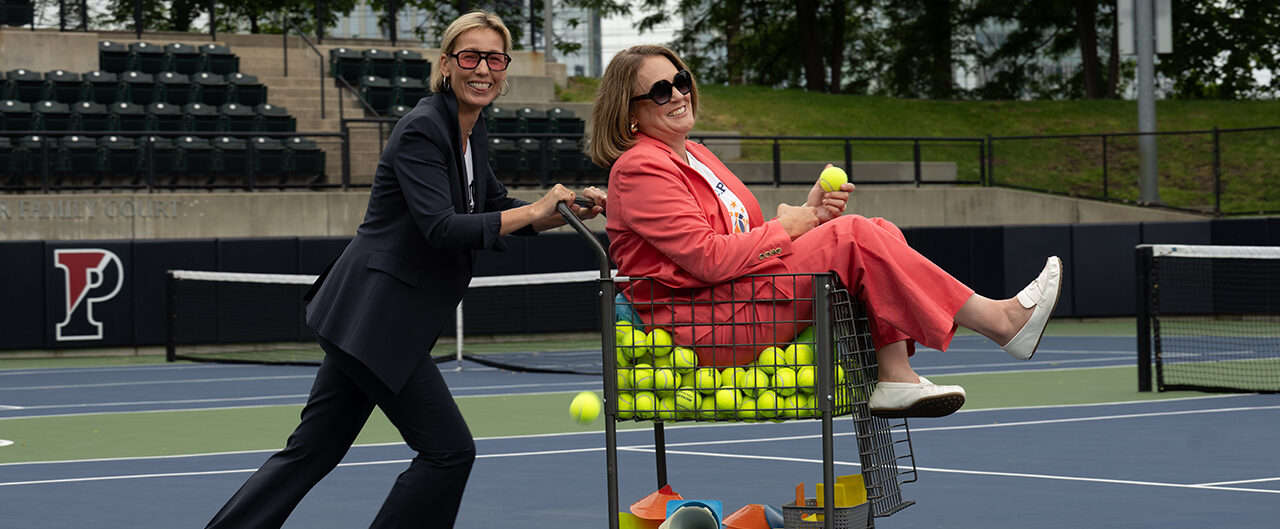
If we want to change the world for women, we’ve got to get our girls the opportunities to develop leadership skills, teamwork, and collaboration that men already have. Sports provide that.
They were tired. Or maybe worn out is more accurate. Not just by the miles they logged to New York and Washington, DC, to catch a Liberty or Mystics game but
by the need to get in the car and travel to watch some form of women’s professional sports.
They lived in Philadelphia, for heaven’s sake, the sixth-most populous city in the United States and a place with a serious commitment to sports. Other cities might be segmented in their loyalties, all in on the NFL but less inclined to care about the NHL, for instance. But Philly fans giddily jump from one team’s season to the next, committed to their city pride. In 2004, Philly lost its mind over a locally bred Kentucky Derby-winning horse named Smarty Jones.
And yet there went comedian and Philly-area resident Wanda Sykes and her wife, Alex Niedbalksi-Sykes, schlepping themselves and their kids to chase women’s sports. The couple was so baffled by the lack of options that they expressed their frustration to some friends at an upstate
New York wedding, including to an NBA executive.
That’s where most people typically stop: Lament, complain, and grudgingly pack the car and ride off to yet another game. But that was in 2019, and the couple’s efforts since then are leading to a major influx of women’s sports to Philly.
In August women’s professional tennis will return to Philadelphia for the first time in 22 years. Last January, Unrivaled, the wildly popular women’s three-on-three professional basketball league, made a tour stop at the Xfinity Mobile Arena, drawing more than 21,000 through the turnstiles. And in four years, the WNBA will finally bring a franchise to the City of Brotherly (and Sisterly) Love.
In one way or another, it all trickles back to those miserable car rides. Borne out of their frustration, the couple trade-marked the name “Philly Sisters,” the first baby step in what has since become an all-out sprint to change the face of the city’s sports. “It was a passion play,” Niedbalksi-Sykes says. “It wasn’t a business play. We were just like, ‘C’mon. Don’t you see it, too?’”
People did see it but only after the Philly Sisters pried their eyes open.
Grassroots might be a bit too organized to explain how this whole thing started. The Philly Sisters’ effort is more a combo of gumption, know-how, cold calling, and fearlessness. “You just don’t take no for an answer,” Niedbalski-Sykes says. “Somebody closes the door; you come in from the window. And if the window is closed, you come in from the fireplace. You find a way to get in.”
Root to Rise
Born in Paris, Niedbalski-Sykes loved tennis and began her career working part-time with the Women’s Tennis Association. She longed for a full-time position, but the organization suggested she work on her English. Undeterred, Niedbalski-Sykes packed up her Parisian apartment, threw what she needed into a single suitcase, and took an internship in the United States. She never left—she jokes that she was born in Paris but chose Philly—building a career that would take her up the corporate ladder in sales, marketing, and public relations. Her trajectory gave her an insider’s understanding of branding and business development that, when coupled with her natural go-getter spirit, allowed her to think well outside a traditional box.
She is also a woman who does not do idle well, and so when everyone else binge-watched their way through the global pandemic, Niedbalski-Sykes started a movement.
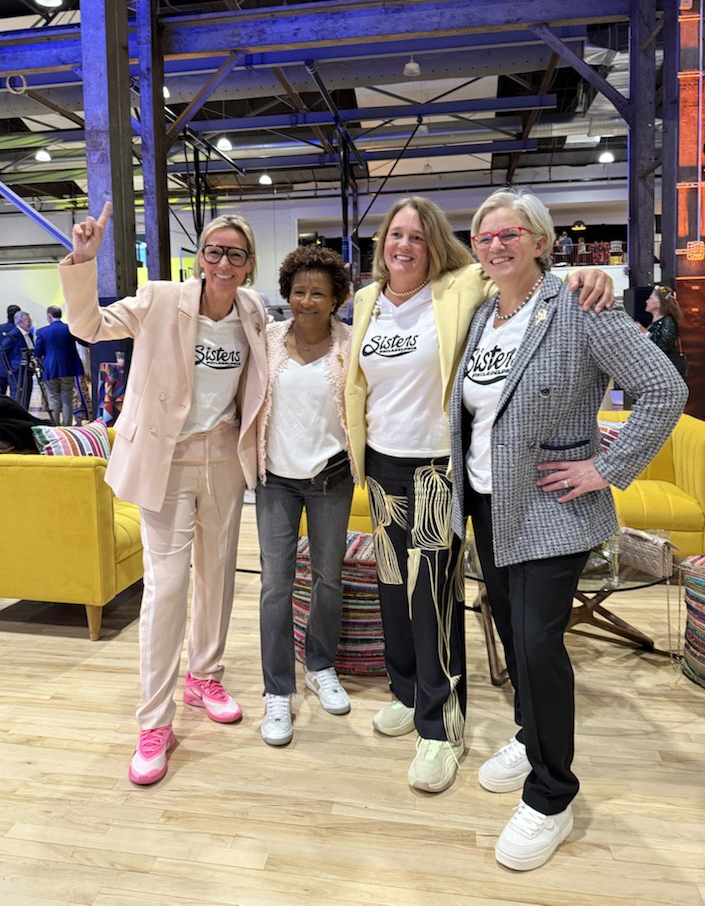
By 2020, Philly Sisters wasn’t much more than an idea with a name, a logo, and a website, but along with cofounders Wanda Sykes and Starla Crandall, Niedbalski-Sykes had found a kindred spirit in Ashley Lunkenheimer, a former federal prosecutor who grew up in Delaware County, PA, and was well-versed in Philadelphia sports culture.
Lunkenheimer’s family loved the Birds, the Phils, and the Flyers, and craved competition even more. Her baby brother, Kurt, played lacrosse at Princeton University. But born with a clubfoot that had to be casted, Lunkenheimer spent the first seven years of her life largely as a spectator. Recognizing speed would not be in the cards for his daughter, Lunkenheimer’s father, a former Army ranger, worked on making her stronger. That translated into All-American status on the Amherst College rugby team and the captaincy of the first U-23 women’s national rugby team. “I had an incredible opportunity because of my dad to learn the value of sports,” Lunkenheimer says. “I can’t play rugby anymore. I can’t play much of anything, but I can see that if we want to change the world for women, we’ve got to get our girls the opportunities to develop leadership skills, teamwork, and collaboration that the men already have. Sports provide that.”
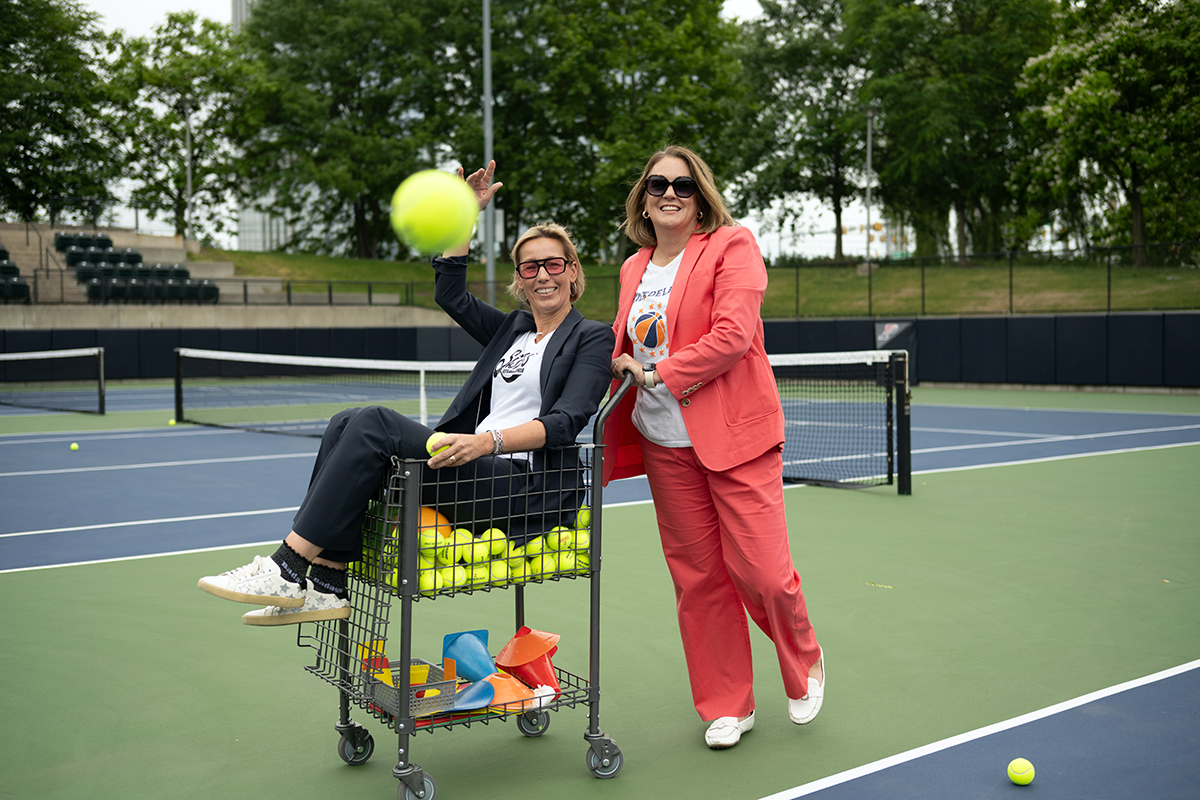
Niedbalski-Sykes and Lunkenheimer are a perfect complement, one blessed with the business savvy to work a boardroom, and the other familiar with the political power brokers who get things done. They tag-teamed their way through the pandemic, hosting Zooms connecting with everyone from Billie Jean King to then-councilperson and now Philadelphia Mayor Cherelle Parker. “Trust the progress™,” a play on the Sixers’ catchphrase “Trust the process,” became not just their catchphrase but their mantra.

Taking Their Shot
The duo sought funding with purpose, anxious to not just craft a concept of women’s sports in Philadelphia but to make it a reality. The city is far from an empty vessel on the topic. In the 1970s, just as Title IX came into existence, the Mighty Macs of Immaculata, a basketball team nearly entirely drawn from the Philadelphia-area schools, won three consecutive national titles, became the first women’s team to play in a nationally televised game, and participated in the first women’s college game at Madison Square Garden. And long before the WNBA existed, famed basketball coach Dawn Staley, who grew up honing her game on the North Philly playgrounds, starred on the Philadelphia Rage, a team in the American Basketball League. Billie Jean King won the first Advanta Championship in the city in 1970 and later housed her WorldTeamTennis club, the Philadelphia Freedoms (like the Elton John song), there.
But as women’s sports exploded in the past decade, Philadelphia missed the revolution. Not, the Philly Sisters soon learned, for lack of interest. “The momentum from day one was amazing,” Niedbalski-Sykes says. “We quickly realized we were onto something. People wanted to help us because people wanted it to happen.”
A groundswell, however, doesn’t happen overnight. It requires rumblings from off in the distance, small shakes to the floor to get things going. The Philly Sisters rattled cages.
While they did not single-handedly convince execs to bring the WNBA to the city, they pushed and prodded behind the scenes to get it done. During the pandemic Zoom marathons, they met with David Adelman, a limited partner in the group that owns the 76ers, and lobbied the NBA franchise’s other owners, plus Comcast and other city influencers to consider putting in a bid for a WNBA expansion team. In 2025, the 76ers did just that, and the city was awarded a team that will begin play in 2030. Among those on stage during the announcement were NBA commissioner Adam Silver and Niedbalski-Sykes.
It could have been the Philly Sisters’ moment, a time to exhale and enjoy the fruits of their serious labor. Instead, it served as an impetus to do more. They partnered with Stoop Pigeon by Watch Party PHL, a South Philly venue that aims to be the destination for women’s sports watch parties, and Sterling Pig Brewery to launch the Philly Is a Women’s Sports Town pilsner. They also quietly started working on their biggest successes to date.
In 2023, WNBA players Napheesa Collier and Breanna Stewart gave their fellow athletes a place to compete stateside after the WNBA season concluded. The Sykes, along with Carmelo Anthony, Michael Phelps, and Ashton Kutcher, were among the early investors, and it quickly attracted the top women’s players, including Paige Bueckers. With total capital of $35 million to start, it’s now valued at more than $340 million.
But in its first year, Unrivaled hadn’t traveled outside of its Miami-area footprint. There to watch a game, the Sykes chatted with commissioner Micky Lawler, who expressed a desire to grow Unrivaled’s footprint with a barnstorming tour.
They countered with the obvious: “Why not Philly?”
In October 2025—only five years after they started—Niedbalski-Sykes and Lunkenheimer stood on a stage at Philly’s Love Park to announce that Unrivaled was coming to town. Within 30 minutes of the announcement, they’d sold 5,000 tickets.
The rest came the old-fashioned way—through networking and elbow grease. Lunkenheimer remembers being in an elevator with some girls, asking if they played basketball. “Then it was, ‘Do you know about Unrivaled?’” Lunkenheimer says with a laugh. “No? Well, it’s the best women’s players in the world, and they’re coming to our city.”
They kept trying, not only because they believed but because they knew failure was not an option. There is still a reality when it comes to launching women’s sports. You get one shot to do it right; if it flops, it becomes a hard sell.
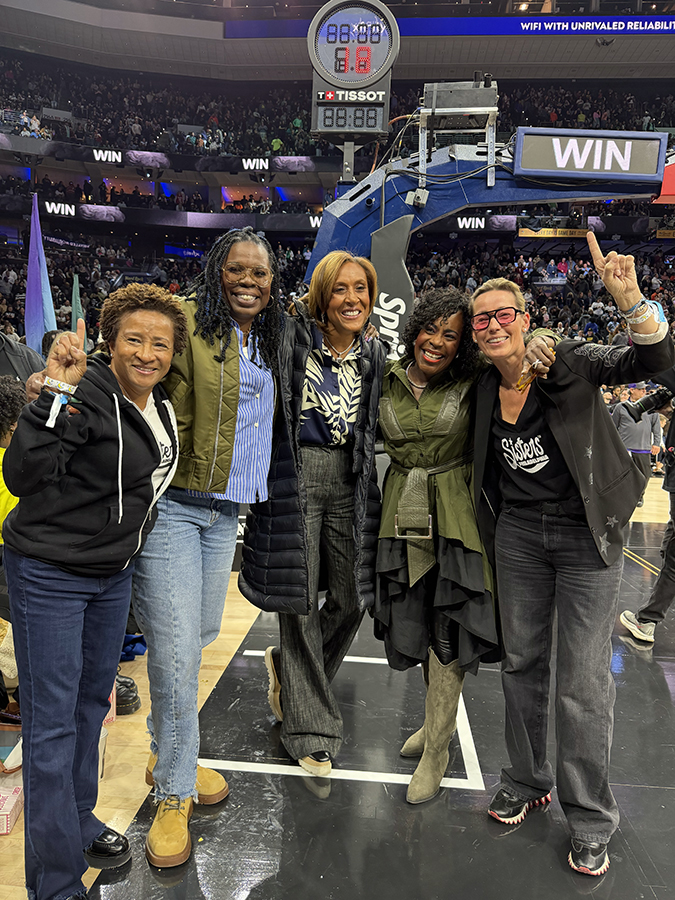
Unrivaled did not flop. On January 30, in the first professional women’s hoops game in the city since 1998, Philly packed the downtown arena with 21,490 people, a regular-season women’s professional basketball game record as well as the biggest crowd in the venue’s history. Philadelphia Eagles legend Jason Kelce and his wife, Kylie, showed up, as did Staley, the queen of Philly sports, and television broadcaster Robin Roberts.
Even bigger to the Philly Sisters, the players hosted a clinic for 200 inner-city Philadelphia middle- and high-school girls. “When Paige Bueckers walked out, you can’t imagine,’’ Lunkenheimer says. “Those women came there for them. You can’t stress what that means. It was just magical.’’
Knocking on the Door
Niedbalski-Sykes and Lunkenheimer enjoyed that moment for about a half second. Empowered by their success and energized by their constantly tinkering brains, they are already on to the next. In May, they announced their next venture: the Ennoble Care Philly Open, designed for the top 100 players or those seeking match readiness. This 2026 tournament is just the first in a three-year contract, meaning women’s professional tennis will have a footprint in the city.
All of which begs the next question: what’s next? The Philly Sisters have tapped into a hungry market and have plans in the works. They also hope to take their concept to other cities, to find motivated sisters elsewhere.
It is equal parts head spinning and amazing, a success story that neither woman can wrap her head around. Just the other day, Niedbalski-Sykes and Lunkenheimer were back in the car, driving. But this time, instead of heading to another city to watch women’s sports, they were maneuvering through their own city, having just taken a meeting about making space for women’s sports in Philadelphia. “We don’t take the time to say, ‘Wow,’ but that day we just looked at each other and started laughing,” Niedbalski-Sykes says. “The momentum, all that’s happening is overwhelming.”
And it’s just getting started.

 Site by