
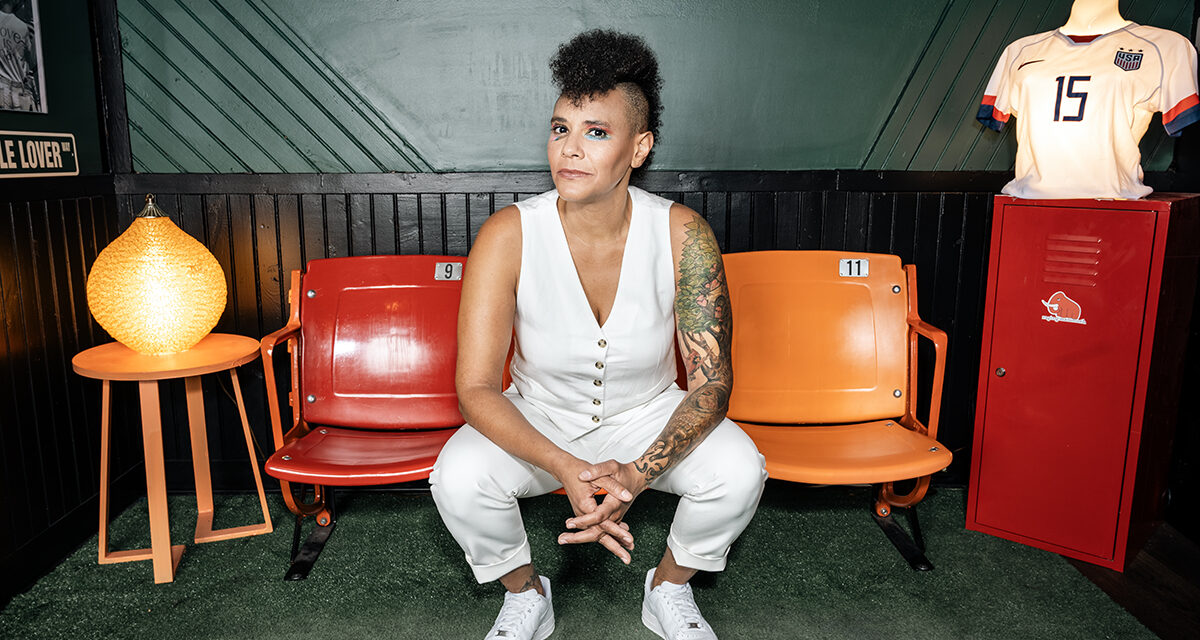
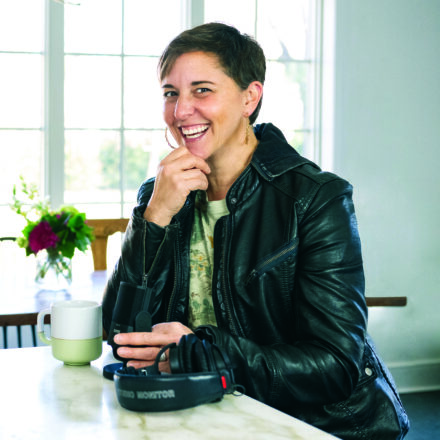
Chivonn Anderson’s launch of Philadelphia’s first-ever women’s sports bar, Marsha’s, is the culmination of a life and a career full of twists and turns.
Someone threw a rock through a window. Others muttered that they didn’t belong or, worse, hurled racial slurs in their direction. This was in 1982, and while decades had passed since the Civil Rights Movement, the fight still raged in small neighborhoods like the Olney section of Philadelphia. But Carmen Anderson refused to budge. Her husband, Gary, looked imposing—a 6-foot barrel of a man—but it was tiny Carmen, born in Puerto Rico but raised in Philly, who carried the strength of her convictions.
And she was resolute that her family would not be chased out of their home. The brick and mortar represented more than just building supplies; it was their foundation.
By sheer force of will, Carmen won the battle, her determination silencing the bullies and eventually even the racists. Her family established roots, and over time Carmen became a beloved part of her community. The door to her home was open to all, and plenty came for her guidance and wisdom. They felt safe there, and more, they felt welcome.
More than 40 years later, Carmen’s daughter, Chivonn Anderson, stands inside the brick-and-mortar building she now owns at the corner of Passyunk Avenue and South Street in Philadelphia. A colorful painting on the wall behind the bar dominates the space. It’s of Marsha P. Johnson, an icon of the New York City gay rights movement in the 1960s and 1970, and the namesake for Anderson’s bar.
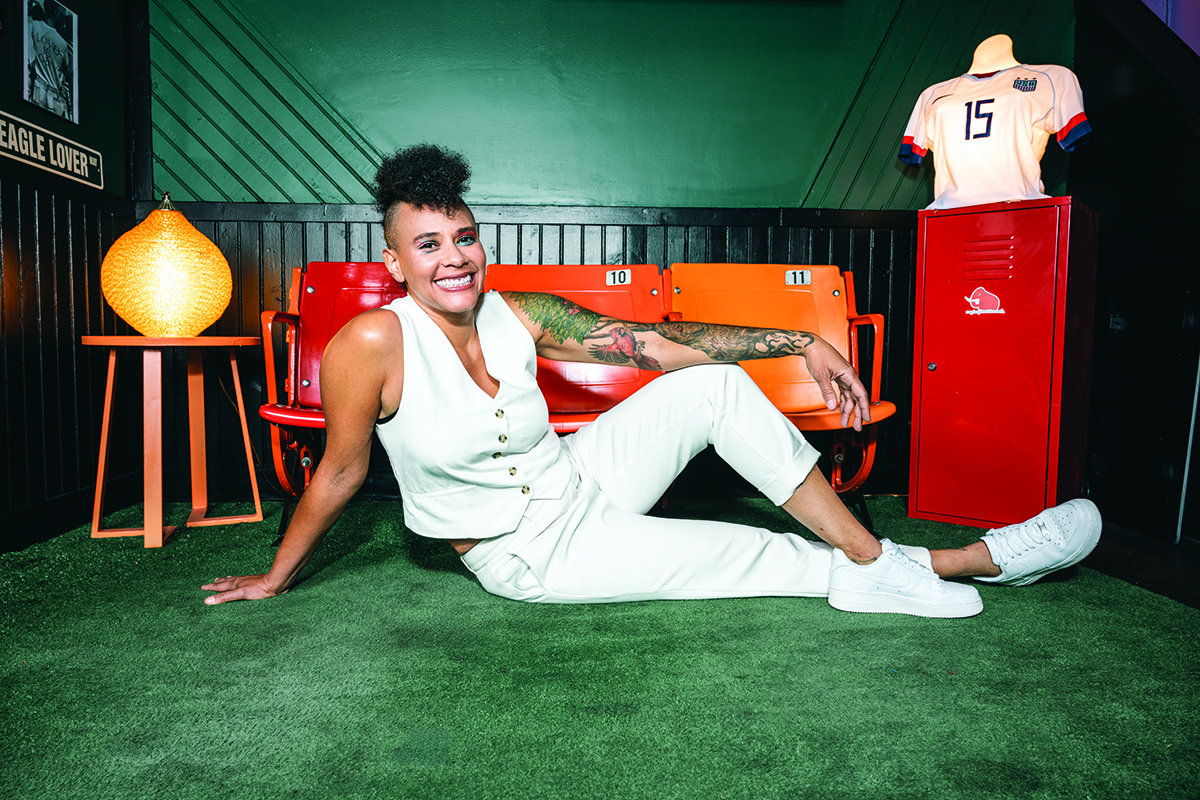
Marsha’s is the first women’s sports bar in Philadelphia, and while it is a literal homecoming for Anderson, it also represents the feeling of coming home. The bar is open to everyone but unabashedly embraces the LBGTQ+ community that is especially marginalized in the sports world. Opened last September, Marsha’s is a great spot to watch the Birds play on Sundays, but it’s also a place that will gladly feature women’s soccer, WNBA games, and whatever fans are interested in watching.
“It’s very much like my mother. That fight but also I want people to come in here and feel welcome and expand their horizons,” Anderson says. “I’m a queer Black woman, but I have all these people in my life who span every aspect of humanity. They all love and accept me, so that’s what I want. I want all those people in my space, feeling at home.”
I was 21 years old. I cannot believe I did it. These men had a lot more protection than I did. But I also knew I had to be a voice for the voiceless.
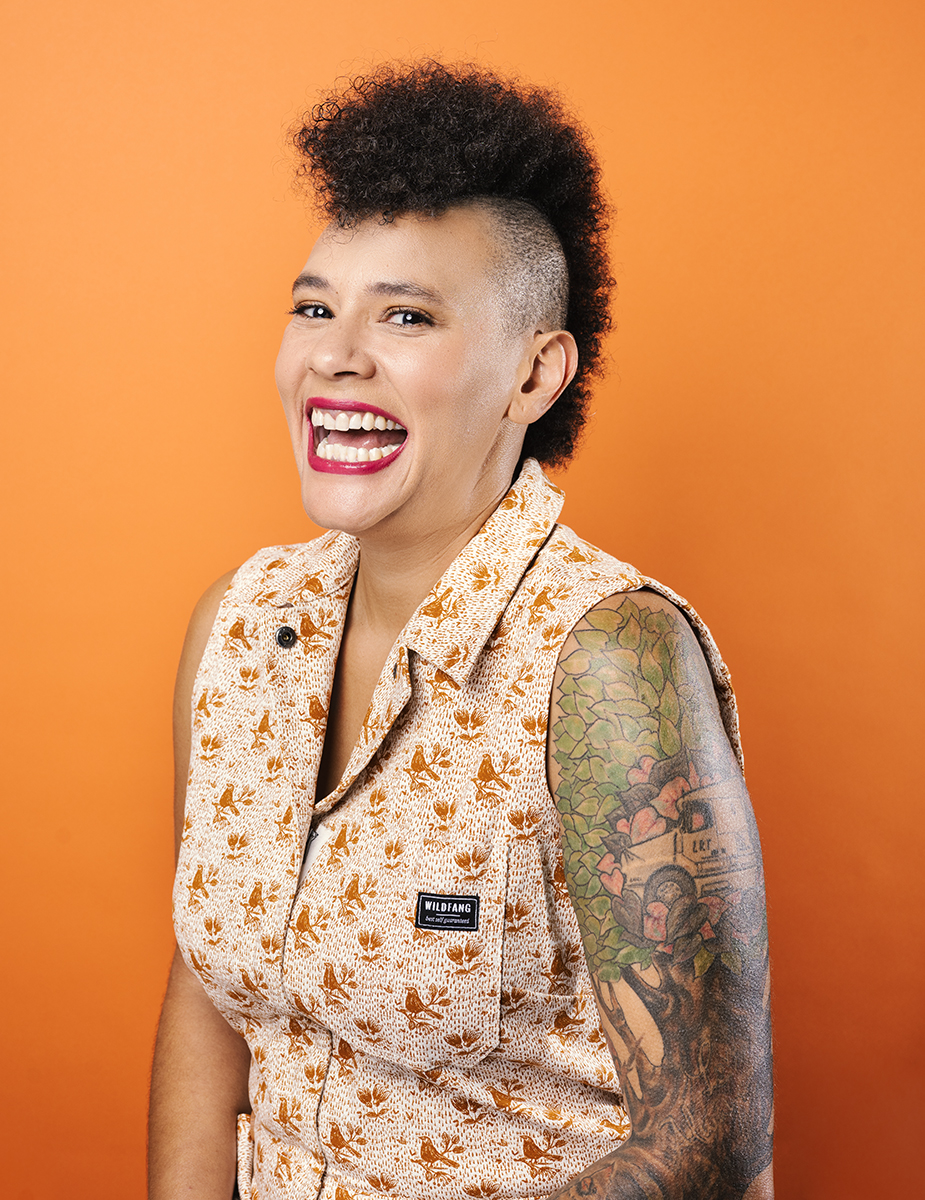
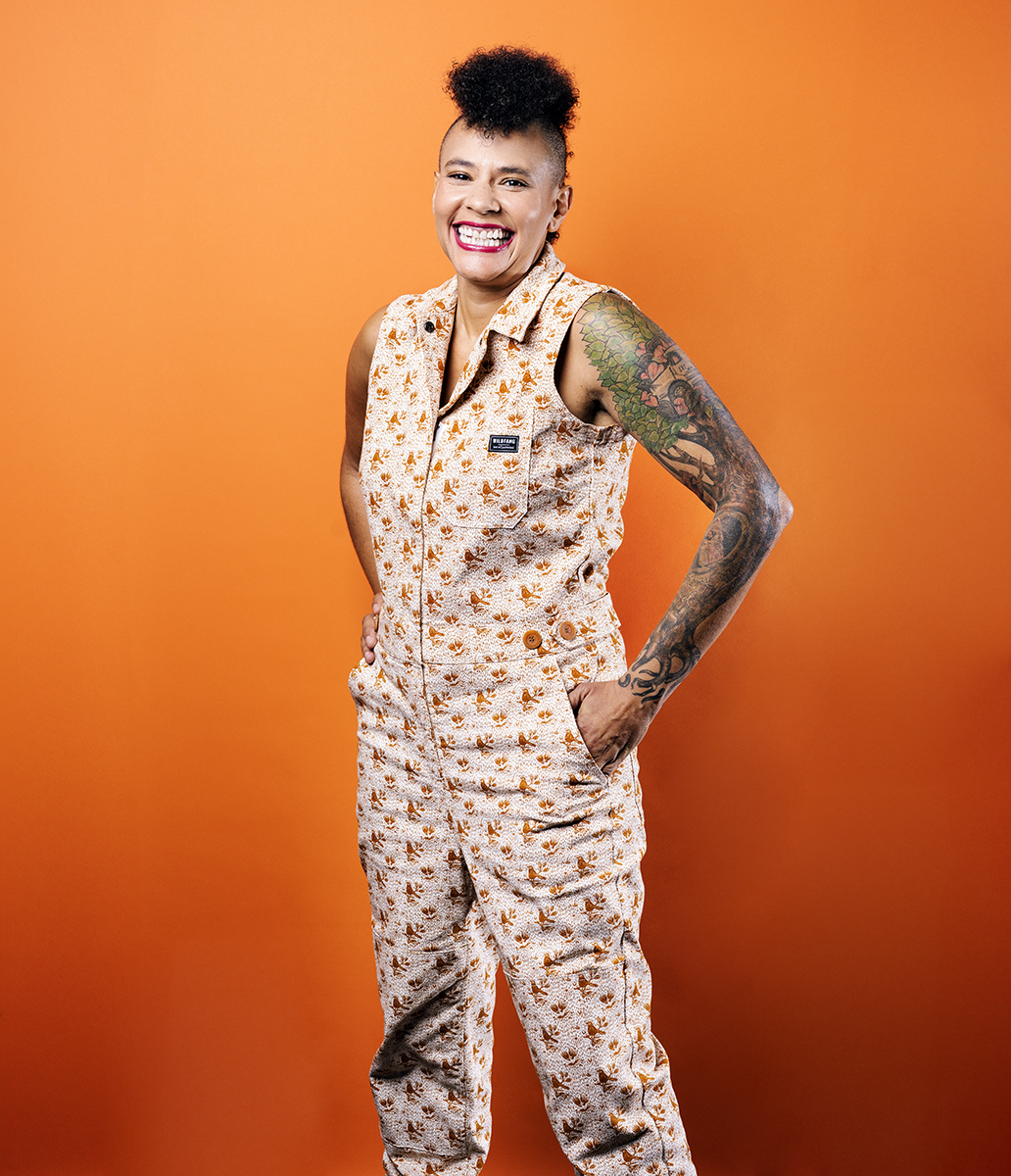
I have all these people in my life
who span every aspect of humanity. They all love and accept me, so that’s what I want. I want all those people in my space, feeling at home.
Voice for the Voiceless
The road to Marsha’s has not been easy for Anderson, pockmarked with both personal tribulations and professional setbacks but offset by Anderson’s innate determination and near steadfast refusal to give up. Ambitious but in need of direction, she left Philly at 20 and joined the U.S. Air Force. Stationed in Florida as a ground mechanic, she joined at the height of the “Don’t Ask, Don’t Tell” military policy, in which LBGTQ+ people were allowed to join but not disclose their sexual orientation or be out in public. Although she had come out to friends and family years earlier, Anderson closeted herself while on base. But that turned out to be the least of her challenges in the military. She was routinely harassed by one of her superiors, and the situation came to a head when he assaulted and threatened to kill her, she says.
Anderson was terrified, instantly recognizing the power dynamics. At first, she couldn’t see a way out, and she briefly sank into deep despair. But she thought about her family, her mother’s ferocity, and their love for her. She recalls when she came out to them, worried about what they might think, but she found not only their acceptance and love but their beautiful indifference to it. “My sister was like, ‘Oh, we all know,’” Anderson laughs.
Buoyed by that strength, she began asking other women in her unit if they’d ever been treated similarly. It turned out that just about all of them had. She fought to find someone up the chain of command to listen to her—many refused, fearful of retribution—and continued up the hierarchy until someone finally did. “I look back now, and I’m amazed at myself,” Anderson says. “I was 21 years old. I cannot believe I did it. These men, 30 years older than me, had a lot more protection than I did, and I’m sure they were like, ‘Who is this person who thinks she’s going to turn everything on its ear?’ But I also knew I had to be a voice for the voiceless.”
An investigation found Anderson’s supervisor had been abusing women for decades, passed off from one base to the next without punishment. Faced with the end of his career and a court-martial, he chose to retire.
But with strong local ties to the community and no evidence of Anderson’s accusations, he was given a job with the local sheriff’s department. Anderson says that began months of torment and intentional agitation, coming to a head when she says she was set up during a big Memorial Day party by a woman she thought was a friend. Anderson says the woman asked her to get ecstasy for some friends, and when she did, Anderson was arrested for possession and intent to distribute. After pleading to a lesser charge, she was sent to the brig for 16 months.
It has been years, but the trauma still torments Anderson. She wipes away tears as she recounts the story. “I was so ashamed,” she says. “They told me I was a disgrace to my country, that I had let down my country. Of course, it was the complete opposite. I stood up to them. I fought back, but it took me years to understand that.”
Anderson went to Austin, TX, after leaving the Air Force, where she worked for the Alamo Drafthouse movie theater chain. She stayed for 10 years, eventually starting its queer programming series, and watched the owners open additional franchises across the state.
But home beckoned, and in 2013 she came back to Philly, this time with a mission. Her 12-year-old self once dreamed of running her own company, and Anderson was determined to realize that dream.
Back to Business
It did not happen overnight. At her first job back in town, working with the Cantina restaurant group, she met Paul Volk. Like Anderson, Volk dreamed of his own business and found a small spot in New York for a fried chicken joint called Redcrest Kitchen. He opened another in Philly, and Anderson invested in 2019. Four months later, the pandemic hit, shuttering the business but not the pair’s determination.
They pivoted to Philly, and after the pandemic ended, they found a restaurant and bar space for a decent price, signing a 10-year lease. Two weeks after they signed the deal, the landlord called and said there’d been a water issue. Anderson naively grabbed a bucket and headed to do some cleanup. When she arrived at a door, the fire department had busted it down to gain access and shut off the gas. A 30-inch cast-iron water main had ruptured beneath the street, sending water so powerful into their business that the ice machine had been dislodged and thrown to the other side of the room.
Fights with insurers delayed the opening of Redcrest Kitchen for months, but the pair got the doors open and found a devoted following. The new spot also opened Anderson up to the vibrant South Street Headhouse District community and, more specifically, its executive director, Eleanor Ingersoll. While Anderson and Volk were making a go of it at Redcrest, Ingersoll told Anderson that the owner of local bar called Woolly Mammoth was putting the space and, more importantly, the liquor license up for sale. “I was at the point that I really didn’t want my next venture to be without the bricks,” says Anderson, who is also a certified real estate agent. “It’s that message from my mother again. To me, the sign of a successful business operation is that you own it.”
Anderson reconnected with Trish Eichelberger, a friend from back in her Alamo Drafthouse days, and bought the business. “Sometimes you take the leap and the net will appear,’’ Anderson says of her attitude toward risk. She intended to launch Marsha’s and help Volk continue with Redcrest, but the demands of a young family and a restaurant business were taking their toll on Volk. He wanted to shutter the business. It was a bittersweet juxtaposition for Anderson, finally on the brink of the brick-and-mortar business she longed for while saying goodbye to a business partnership and venture she felt gave her real purpose and direction. But she understood and supported Volk’s decision. They closed Redcrest in the summer of 2025; days later she and Eichelberger finalized the deal to purchase the space for what is now Marsha’s. “It’s one door closing and another opens,” Anderson says. “A lot of people would say, ‘Look at all you’ve been through to get here.’ But that’s the pessimist’s outlook. I feel like the universe has been guiding me to this point.”
Just for sport
Anderson has always been a sports fan. When, when her family lived in Olney, she often ventured to a nearby cinder-block wall, tennis racket in hand, where she’d spend hours. “I think it’s where I started with the mindset that if you want to do something, you have to practice,” she says. “You must put in the work. You’re going to lose. You’re going to fail. But it’s what did I learn from that experience to make me better? That’s how I approached being an athlete. It’s also how I’ve looked at my business.’’
In 2019, the first seed for what would become Marsha’s was planted. Anderson went to a South Street sports bar to watch the final of the Women’s World Cup. She had spent a portion of the summer in Europe, where the matches were played at pubs and bistros everywhere. But when she asked to flip the TV from the Phillies-Mets game to the final, the bartender refused. After some arguing, he reluctantly agreed. By the time the game ended, a small crowd had gathered around with Anderson to watch the United States beat the Netherlands, 2-0.
That’s the feeling Anderson is crafting at Marsha’s. “We are trying to highlight everything that is queer, that is about being a woman, but we also want this to be a place about community and camaraderie,” she says. “That’s what sports bars are meant to feel like, and we just want ours to be about that but also include people you wouldn’t be around in a sports bar. No judgment, just enjoy.”
Because she is hard wired the way she is, Anderson has big dreams for Marsha’s. She wants her sports bar to be as much a part of the Philly sports vernacular as Chickie and Pete’s, with visions of franchises across the city and even space in the arenas downtown. Women’s sports continue to grow in access and popularity—Philadelphia is finally getting a WNBA team in 2030—and Anderson sees no reason why Marsha’s can’t grow in lockstep with it.
“Every single thing that has happened in my life has led me to this point right now,” she says. “I know I am in the right place at the right time to do what we’re doing. We need a space that makes room for other professional athletes. We need a space that welcomes us. And that’s what this is. That’s what Marsha’s is.”



 Site by