
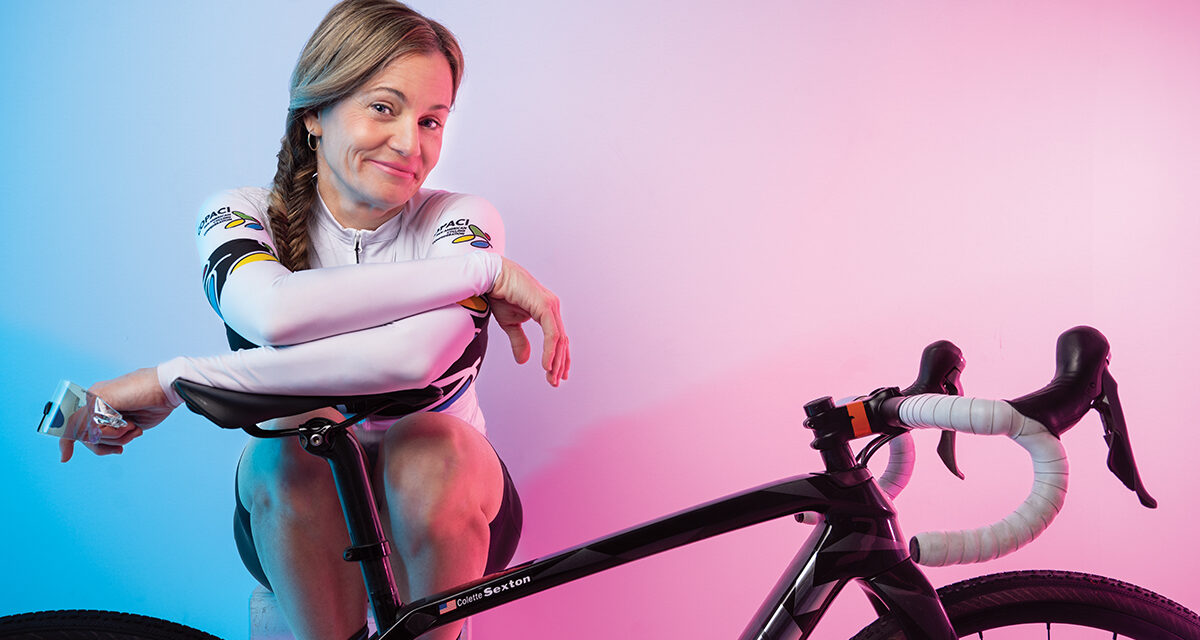
Seven years after finishing in the back of the race, Colette Sexton reached the pinnacle of cyclocross last December by winning the national championship for her age group. In a sport built on rugged terrain, she’s got the momentum to keep winning.
Colette Sexton was on a bike ride recently with 13-year-old Kendal, the youngest of her two daughters. They wound their way through Hunterdon County, NJ, from West Amwell to Ringoes, across to Sergeantsville and down through Stockton. For two hours mother and daughter pedaled, until they ended up on the towpath on the way to Lambertville. As they rolled along the Delaware River, Kendal looked over at her mother and asked, “Can I go up ahead?”
Sexton smiled to herself and gave her approval. “I totally remember the first day I learned to ride my bike,” she says. “It was the coolest thing in the world. I could just go. It was this amazing freedom, and when she asked, I’m just riding behind her watching her taste that same freedom.”
For the better part of her life, Sexton has chased that taste of freedom, upping the ante from happy childhood rider to competitive mountain biker and now to the national championship of cyclocross.
Sexton reached the pinnacle of her sport in December, winning the title for the 55 and over age group. Hers is not a sport for the faint of heart. Cyclocross has been described as a mix of mountain biking, road cycling, and steeplechase. Competitors ride what look like traditional 10-speed bikes, only with knobby tires, around a 1- to 1.5-mile course that includes woods, ramps, sand, and other barriers. Riders often dismount to climb steep hills or maneuver stairs, all with their bike in hand.
The races are short—under an hour—but incredibly grueling and require a combination of power and endurance. Sexton loves the mental challenge as much as the physical, as she tries to solve the riddle of a racecourse while also finding the strength and stamina to master it. “You’re going as hard as you can, dialing in as you go,’’ she says. “You see people on the course, winding in and out, as you try to manipulate the same feature multiple times. It’s incredibly intense.”
Some people don’t have to win. I do. I’m not happy if I’m not winning.
I’m not going to get faster and faster. But that doesn’t mean I can’t reach my top in my 50s. It doesn’t mean I have to stop.
Switching Gears
What makes Sexton’s dedication to cyclocross even more fascinating is her abrupt departure from her day job. Sexton is an artist, schooled at the Art Institute of Chicago and the University of Oregon’s master’s in fine arts program. She owned her own gallery in Lambertville for years, shuttering it only recently.
Much like her discovery of cyclocross, art found her as much as she found it. Her family was hardly artistic. She jokes that her mother’s decorative artwork tracked toward curious garage sale finds. But she quickly realized she saw things differently—how the light hit objects or the color variations in a sunset.
Yet it is because of her passion for art that Sexton found competitive cycling. Before moving to Chicago for school, she rode her mountain bike through Tyler Park in Newtown, PA, on the weekends. In Chicago, she lived a struggling artist’s life, waitressing for spending money while trying to get her work shown.
As an undergrad, she biked to school, and on the weekends, she’d leave the city for a mountain bike excursion. That translated into racing.
She loved cycling so much that she faced a choice: move to Colorado and take up the sport professionally or head to Oregon to pursue her a master’s degree. She opted for graduate school but was determined to keep her cycling going. She entered a race there, a 6,000-foot climb. “I thought I was going to be as successful as I was in the Midwest,’’ she says. “Instead, I almost threw up. Everything hurt.”
Sexton quit on the spot, cold turkey. She was 24 years old and wouldn’t ride competitively again for more than a decade. She didn’t stop being an athlete. She ran and joined a women’s soccer league but as for biking? Aside from a casual ride down the towpath, she pretty much put her bike in mothballs. “I was a rare cyclist,” she says with a laugh. “But I had other things going on. I had my gallery and worked there seven days a week. I just changed my focus.”
She met others in the art community in Lambertville, including two other gallerists who liked to bike on weekends. They nudged her into joining them on a ride in Hillsborough. It went about as well as one might expect for someone who hadn’t ridden competitively in years. “I totally got dropped,” she says.
She could have quit again; except this time Sexton wanted to right her wrong. “My old coach used to call it the psycho gene,’’ she says. “Some people don’t have to win. I do. I’m not happy if I’m not wining, and that just kicked in.” It did not go like a fairy tale. Far from it. She went to another race the following weekend and crashed, but she kept going back, competing in club races weekend after weekend.
At one of those she first spied cyclocross, eyeing up a mock race. “That was it,” she says. “That was the end.” Her competitive wiring reconnected, she started competing in beginner races. “Within a year, I decided I wanted to be a national champion,” she says.
Competitive Spirit
That was in 2017. Sexton admits now it was not an attainable aspiration. She entered her first national competition in 2018. She finished 28th out of 30, once flying over her handlebars. But that race opened her eyes to the reality of her challenge. The women involved were serious athletes who trained for the competition. “Washboard stomachs, no body fat,” she says of her competition. “I realized I was not even close.” She hired a coach and created a training regimen and realized quickly what was missing.
Despite the short duration of the race, cyclocross requires real endurance, which took time to develop. Sexton used her Garmin watch to track her races, and nearly every time she hit the 22-minute mark, she was toast.
She stretched her goal to winning a national title to three years and worked to build endurance. Three years became five and Sexton failed more than she succeeded. “Losing is the biggest learning experience,” she says. “When you start out, you’re strong and fast and you don’t think anything about conditions or tactics.”
Two years ago, a friend coaxed Sexton into doing a gravel race called Unbound in Kansas. Cyclists ride 200 miles in one day. Sexton had never ridden more than 60 miles in a day.
But she and her coach concocted a plan to tackle it. She finished five century rides (100 miles) and shorter gravel races of 90 and 130 miles. Sexton went to Unbound unsure what to expect. She finished the race in 15 hours, 20 minutes, third in her age group.
It was as much a mental breakthrough as a physical one. “I had no idea my body could do that,’’ she says. “After that, I felt like I could do anything.”
At nationals that year Sexton finished fourth, her first podium appearance. She thought surely the next year would be her moment. Instead in 2024, on a muddy track, she struggled again. “It was terrible.’’
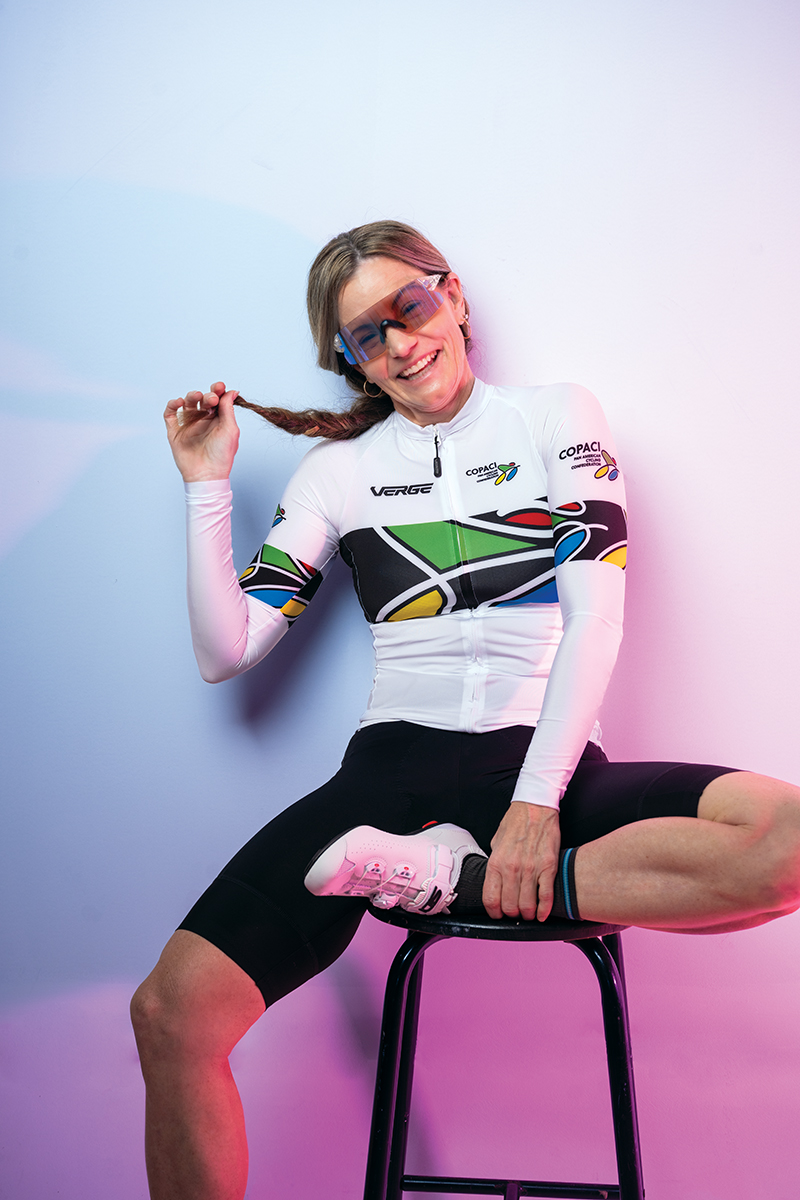
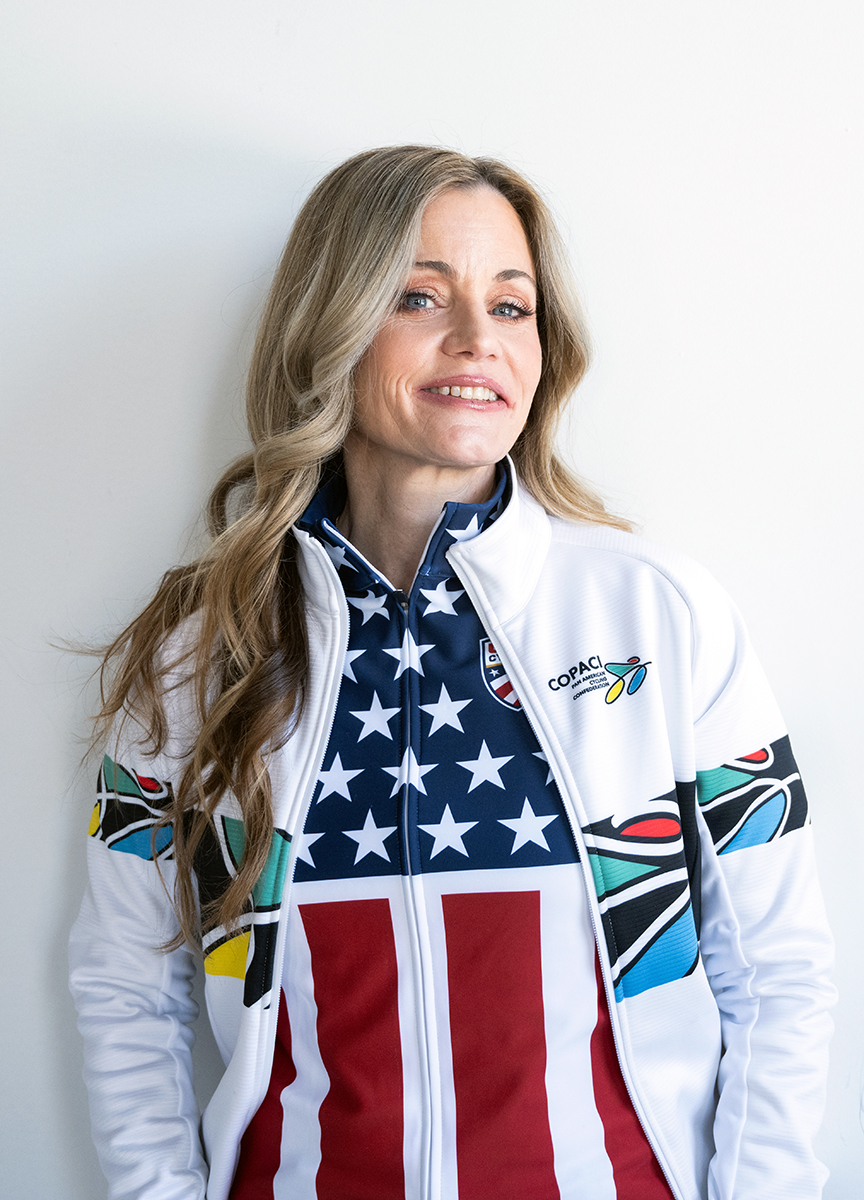
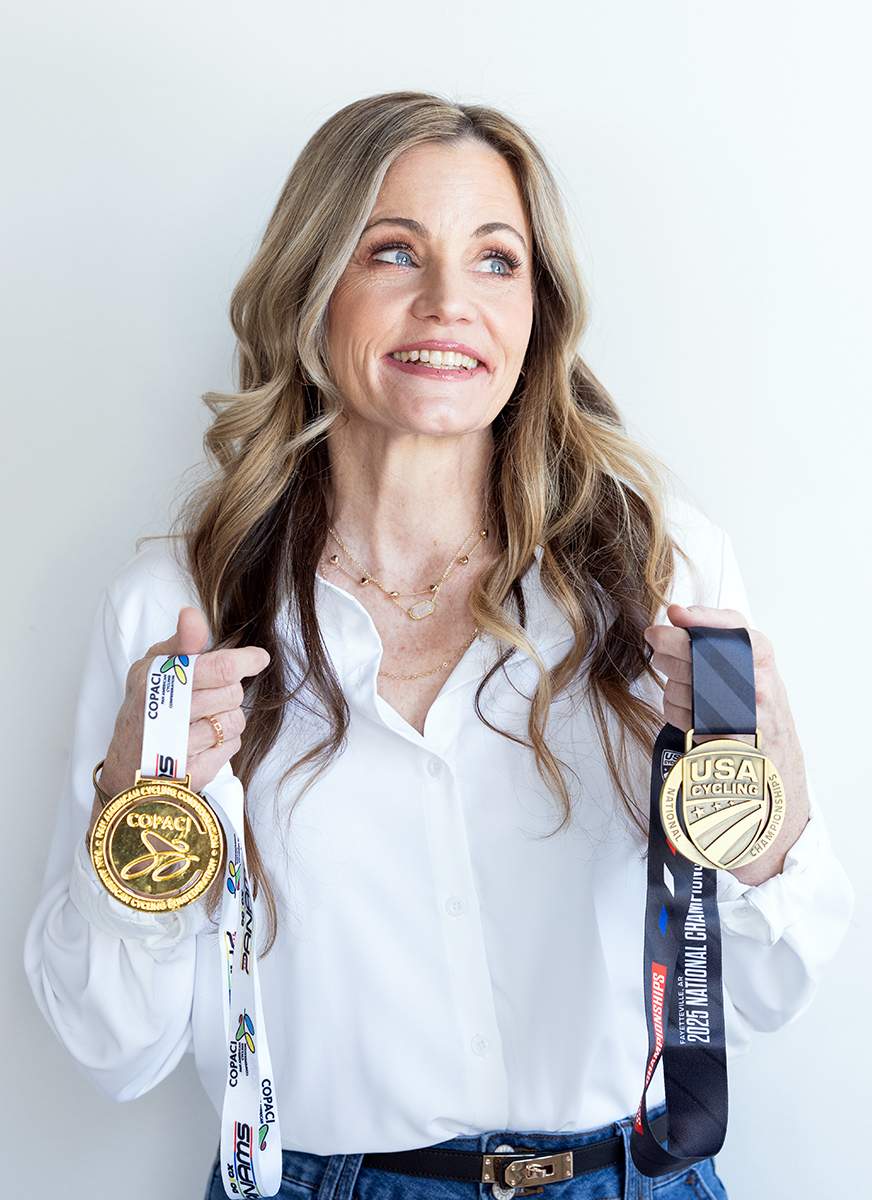
Finally in 2025, everything went right. Before tackling nationals, Sexton competed in the Pan Am Championships in Washington, DC. She blistered the competition to win by more than eight minutes, earning her the Pan Am jersey. She was pleased but not satisfied. “I checked that box,” she says. “But I wanted nationals.’’
That came in December in Arkansas. Ranked third headed into the race, Sexton fed her mind with positive reinforcement. She even told herself how much she would win by. The goal was 27 seconds.
She won by 27 seconds.
Afterward Sexton expected to feel settled. Having finally achieved her long-held goal, she waited for the sense of contentment. She had done what she set out to do. Now it was time to relax. “That lasted for 24 hours,’’ she says.
Rather than relax into her accomplishment, Sexton turned immediately into defending her title. The nationals return to Arkansas in December. Odds are, Sexton will be there.
The older she gets, the more motivated she is to chase her dream. “I know that I could beat my 25-year-old self,’’ Sexton says. “I’m not going to get faster and faster. But that doesn’t mean I can’t reach my top in my 50s. It doesn’t mean I have to stop.’’




 Site by